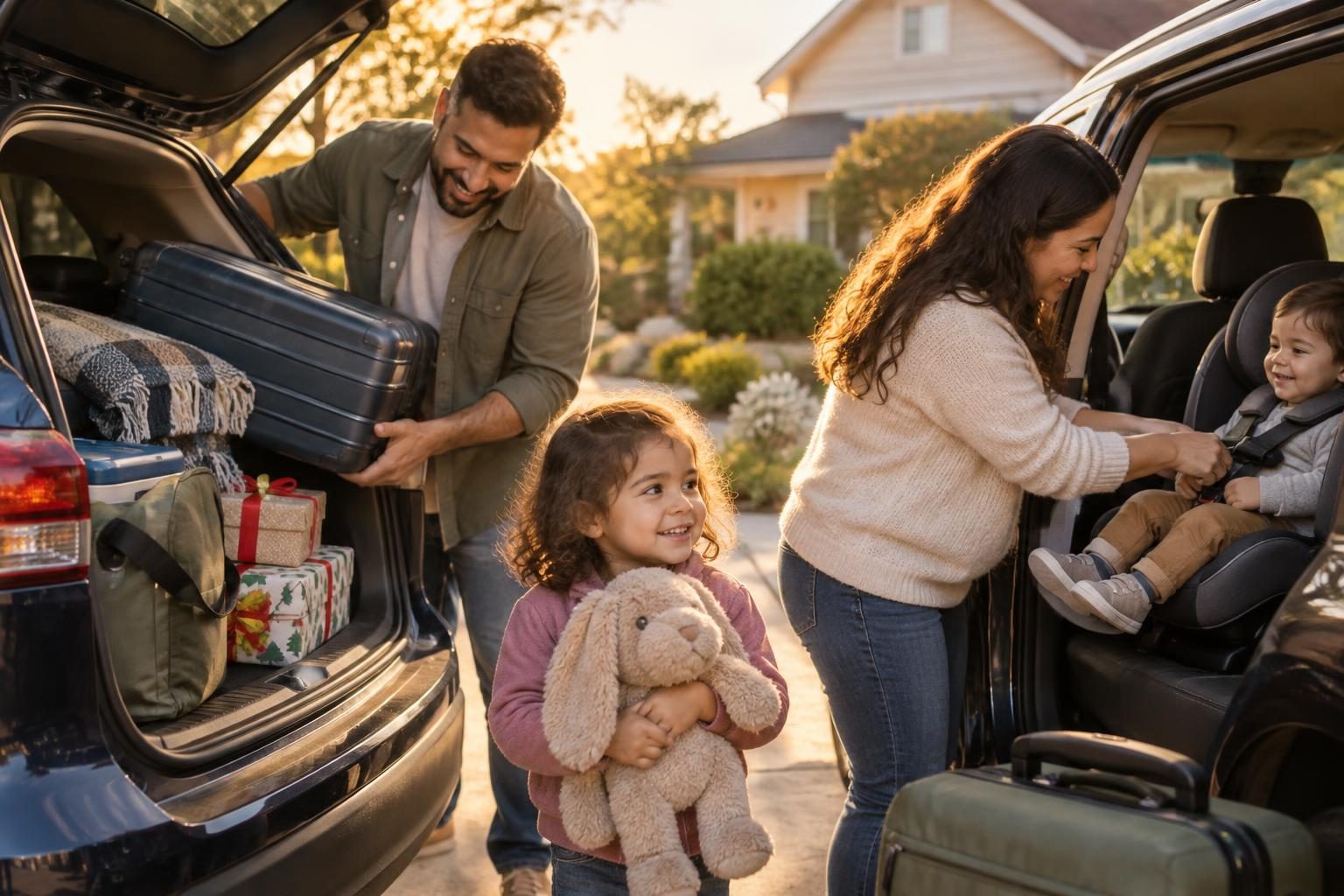
There's a particular kind of tired that comes from packing for a family trip: the diaper math, the snack strategy, the quiet dread about the car seat on the plane. If you're heading to see family this year, I hope this makes it feel a little more doable.
Know what you're up against
Holiday travel keeps breaking records. AAA projected 81.8 million Americans would travel over Thanksgiving week 2025, nearly 90% of them by car. In the air, the Sunday after Thanksgiving 2025 became the busiest day in TSA history, with more than 3.1 million people screened.
What that means for us:
- Avoid the peaks if you can. The Wednesday before and the Sunday after a holiday are the crunch. Traveling on the holiday itself, or a day or two earlier or later, usually means calmer roads and shorter lines.
- Leave early in the day. Morning flights are less likely to be hit by delays that pile up as the day goes on, and kids are fresher too.
- Pad everything. Whatever the app says, add time. Rushing is when meltdowns (theirs and ours) happen.
If you're driving
- Car seats first. The American Academy of Pediatrics recommends keeping little ones rear-facing as long as their seat allows, and taking puffy coats off before buckling, since thick padding can leave the harness too loose. Tuck a blanket over them instead.
- Plan stops before anyone needs them. Every couple of hours, let everyone out to stretch, run around and use a real bathroom.
- Time the long stretch around a nap or bedtime, if your kids sleep in the car.
- Keep a small bag within reach: wipes, a change of clothes, snacks, a few new-to-them small toys, and a travel potty if you have a newly trained kid.
If you're flying
- Think about the car seat. The FAA says the safest place for a child on a plane is in an approved car seat in their own seat, not on a lap. Lap travel is allowed under age two, but the FAA strongly discourages it. Look for a label that says the seat is certified for use in motor vehicles and aircraft.
- For bigger toddlers, the FAA-approved CARES harness works for kids who weigh 22 to 44 pounds and are up to 40 inches tall, in their own seat (FAA).
- Bring the milk. Formula, breast milk and juice in amounts over 3.4 ounces are allowed in carry-ons. Take them out for separate screening. Baby food, teethers and ice packs are allowed too.
- Help little ears. Swallowing during takeoff and landing helps with pressure, so offer a breast, bottle or pacifier then (Mayo Clinic). For older kids, a drink or snack helps, and staying awake for the descent helps, because we swallow less while sleeping.
- Skip the sleepy medicine. Mayo Clinic advises against giving diphenhydramine (Benadryl) to make a baby sleep on a flight. It can backfire, and it isn't safe for every child.
Sleep away from home
Expect a rough night or two. New rooms, late dinners and excitement throw off even great sleepers. Bring the familiar things: the same sleep sack, the white noise machine or app, the favorite book. Keep the bedtime steps the same, even if bedtime itself shifts.
For babies, keep sleep safe away from home too: on their back, in a portable crib or a hotel crib with a fitted sheet and nothing else. Ask grandparents to put away the heirloom bumpers and quilts.
Lower the bar, on purpose
The goal of a holiday trip with little kids isn't a perfect itinerary. It's time together. Pick one plan a day. Skip the event that lands at naptime. Take turns letting each parent rest. Say no to a fourth house visit without guilt.
Someday your kids won't remember the delayed flight or the meltdown at the rest stop. They'll remember Grandma's kitchen and the cousins and the feeling of everyone together. That part is worth the snack bag.
Staying home this year? Our Thanksgiving break guide has plenty to do close to home.
Sources
- AAA. Thanksgiving travel forecast, 2025.
- TravelPulse. Thanksgiving 2025 breaks TSA's all-time daily traveler record.
- American Academy of Pediatrics (HealthyChildren.org). Car seats: information for families.
- American Academy of Pediatrics (HealthyChildren.org). Winter car seat safety tips.
- Federal Aviation Administration. Flying with children.
- TSA. Breast milk, formula and juice exempt from the 3-1-1 liquids rule.
- Mayo Clinic. Air travel with an infant: is it OK?
- KidsHealth (Nemours). Flying and your child's ears.